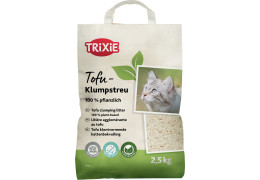
Choose Trixie tofu clumping cat litter: eco-friendly, biodegradable, and ultra-absorbent. It naturally neutralizes...
Eye care for cats and dogs, and how to clear brownish marks
Caring for your dog's and cat's eyes: cleaning and lifting the stains

What to treat it with, and how to keep it away
The stain comes back for as long as the area stays damp. The departments that help:
- Eye care — lotions and pads, from the inner corner outwards
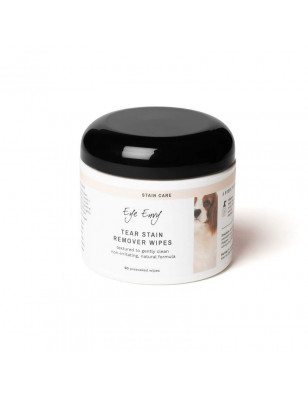
- Wipes — the daily pass, one per eye
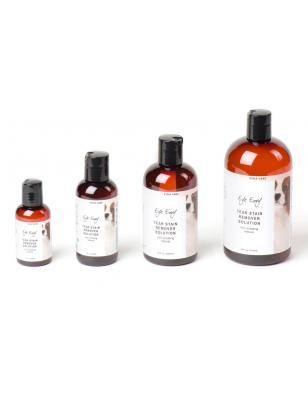
- Eye Envy shampoo — the range built around tear stains
- Whitening shampoos — lifting a white that tears have yellowed
- Ear care — the other fragile area, never a cotton bud in the canal
Why does your animal's eye area become discoloured?
Tears keep the cornea moist and carry dust towards the nose. Normally the excess fluid drains through small ducts in the inner corner of the eye. When those ducts are blocked or too narrow, the tears spill over onto the hair. That is what is called watery eyes, or epiphora.
A natural pigment, porphyrin, produced as red blood cells break down, stains that hair reddish-brown. The constant damp also creates ideal conditions for bacteria and yeasts, which deepen the colour further.
The main causes in dogs
- Inflammation of the eye: conjunctivitis, keratitis or uveitis all increase tear production.
- Blocked tear ducts: a duct that is narrow from birth, or blocked by a foreign body or an infection, no longer drains as it should.
- Build: in flat-faced breeds such as pugs or Shih Tzus, the reduced nasal cavities make tears spill over more easily.
The main causes in cats
- Eye conditions: entropion (an eyelid rolling inwards), conjunctivitis, uveitis, glaucoma or viral infections irritate the cornea and trigger excess tears.
- Allergies or dental problems that inflame the face and hinder normal drainage.
- Narrow tear ducts: some flat-faced breeds, such as the Persian, have very fine ducts that block easily.
Constant damp and porphyrin then build up on the hair, forming brown crusts that irritate.
Why is eye hygiene essential?
Beyond appearance, dried secretions and damp make an ideal breeding ground for microbes. Tears alone do not remove all dust, and crusts can cause irritation. Regular care prevents infection and lets you spot any change quickly — redness, swelling, coloured discharge — that would call for a veterinary consultation.
How to clean your dog's eyes
Equipment and frequency
Have sterile pads to hand, a veterinary eye lotion or a suitable saline solution and, if needed, small scissors to clear the hair. Flat-faced or long-coated dogs should be cleaned daily, while two or three times a week is enough for the rest.
The cleaning steps
- Apply the lotion: put a few drops on a pad and hold it for a few seconds against the closed eye to soften the secretions.
- Wipe gently: slide the pad from the inner corner outwards without rubbing. Repeat with a fresh pad if necessary.
- Clean the coat: run a little saline over the stained hair and, if needed, trim the hairs that rub the cornea.
- Use a separate pad for each eye so you do not spread microbes.
Avoid eye drops intended for people, and any unsuitable product, without veterinary advice.
How to clean your cat's eyes

Preparation and the products to choose
Use lint-free pads or dedicated wipes, along with saline or an eye lotion formulated for cats. Plant-based home remedies that suit dogs are not suitable for cats.
The procedure
- Instil the saline: open the lids gently and put in a few drops of saline.
- Let it work for a few seconds to dissolve the debris.
- Wipe from the outer corner inwards with a clean pad.
- Reward your cat so it associates this care with something pleasant.
Do this two or three times a week, or daily if your cat is prone to watery eyes. Avoid cotton wool, which leaves fibres, and discard single-dose vials once opened.
Products to avoid
Tea, chamomile or boiled water on its own are not suitable for a cat's eye. Choose eye lotions with an appropriate pH and ask your vet if in doubt.
Céline's tip:
For my own Persians and Shih Tzus I use the lotion NO MORE TEARS
No More Tears is a cleanser made for complete care of the eyes and the area around them in dogs and cats.
It soothes mild inflammation of the tear duct and also helps prevent watery eyes. Its gentle ingredients, such as cornflower, also calm the eye itself.
Used regularly to clean inside and around the eye, it makes the tears less acidic and therefore less staining.
Available in 250 ml and 1 litre.
Lifting the stains and keeping them away
Once the watering is under control, the marks can be reduced by drying the coat carefully and using a stain remover containing, for instance, boric acid. Trimming the hair around the eye regularly limits sogginess and lets air circulate. A lasting result, though, depends on treating the cause: an infection or a blockage needs professional attention.
Céline's tip:
.jpg)
This is the routine I have tested and relied on for years with my Persians and Shih Tzus to clear the area around the eyes:
1 / Clean inside and around the eye thoroughly with the eye lotion
NO MORE TEARS.
2/ Dry gently with soft absorbent paper such as a tissue, unscented.
3/ Apply the Eye Envy lotion to the hair, never into the eyes.
4/ Apply the Eye Envy powder over the top (it is the lotion and the powder working together that lifts the colour).
You can reapply the powder during the day to absorb damp in the hair, which oxidises when wet.
Remember to dry the damp areas under the eyes and on the beard regularly to prevent yellowing.
This routine works, but it is not magic. It has to be followed daily until the colour lifts. After that the eyes need regular cleaning so the stains do not return.
.jpeg)
When should you see a vet?
Yellow, green or dark brown discharge, redness, swelling or a sudden change in the eye are warning signs. In dogs, discharge that has just started can mask conjunctivitis, glaucoma or uveitis. In cats, persistent watering can point to cat flu or a foreign body lodged in the tear duct. In every case, only a vet can diagnose the cause and propose the right treatment.
FAQ
Why does my animal have brownish marks under its eyes?
The marks come from tears containing porphyrin, a natural pigment, sitting in the hair. When tears do not drain properly they spill over and soak into the coat, which also encourages the yeasts and bacteria that deepen the colour.
How often should I clean my dog's or cat's eyes?
Flat-faced dogs and those with prominent eyes need daily cleaning. For other dogs and most cats, two or three times a week is enough, except where watering is heavy, in which case daily care is needed until it improves.
Can I use home remedies on my cat?
Unlike dogs, cats are sensitive to many plant compounds. Chamomile infusions and home-made saline solutions are not recommended for them. Choose lotions formulated specifically for cats' eyes, or saline, and ask your vet before trying anything new.
How do you prevent tear stains appearing?
Regular cleaning and careful drying of the hair around the eyes are the best prevention. Keep the hair short so it does not rub the cornea, treat eye irritation early, and see a vet to identify and correct the cause of persistent watering.
Conclusion
Brownish marks under the eyes reflect tears that are not draining as they should. By understanding what causes the watering and keeping up a regular routine with suitable products, you protect your animal's comfort and health. Gentle remedies can give dogs some relief, while cats need products made specifically for them. If anything looks unusual, never hesitate to see a professional.
Stain removal routine for dogs and cats:
2- EYE ENVY STAIN REMOVER LOTION
3- EYE ENVY STAIN REMOVER POWDER
For the beard, use the EYE ENVY stain remover spray.
.jpeg)
Chat with us on WhatsApp